That shift is being driven by multiple forces at once. Investors are paying closer attention to climate and ESG risks, regulators are raising expectations around resilience and disclosure, and customers and partners are placing greater value on long-term responsibility and operational efficiency. For companies operating in energy-intensive sectors, sustainability is now closely tied to competitiveness, risk management and future readiness.
In this environment, the most forward-looking organizations are moving beyond viewing sustainability as a compliance requirement. Instead, they are embedding it into core business decisions from capital investment and project design to innovation, supply chains and operational performance.
A broader shift in the UAE
The UAE offers a strong example of this shift. Sustainability is increasingly being positioned not simply as an environmental objective, but as a driver of economic resilience, industrial transformation and long-term national competitiveness.
This is reflected in the UAE’s evolving policy landscape, including the UAE Energy Strategy 2050 and related national programmes, which are geared towards expanding clean energy capacity, improving efficiency and accelerating long-term decarbonization across the energy and water sectors. In 2025, the Ministry of Energy and Infrastructure said the strategy aims to increase the share of installed clean energy capacity to 30% by 2030, expand renewable capacity to 14 GW by 2030, and reduce energy use by 40% and 51% reduction in water by 2050 through the National Water and Energy Demand Side Management Programme.
What is increasingly clear is that sustainability in the UAE is no longer being approached in silos. It is becoming embedded across policy, infrastructure, industrial development and investment that is creating a more integrated model for growth.
Case Study: NMDC Group
That same shift is increasingly visible at the corporate level.
For NMDC Group, sustainability is becoming less about standalone commitments and more about how the business creates value across its operations. The Group’s recent ESG progress report reflects a more integrated approach that links sustainability with operational performance, innovation, safety and long-term resilience. Its reporting is aligned with recognized frameworks such as GRI, SASB, TCFD and MSCI ESG Ratings, signalling a more structured and investor-relevant ESG approach.
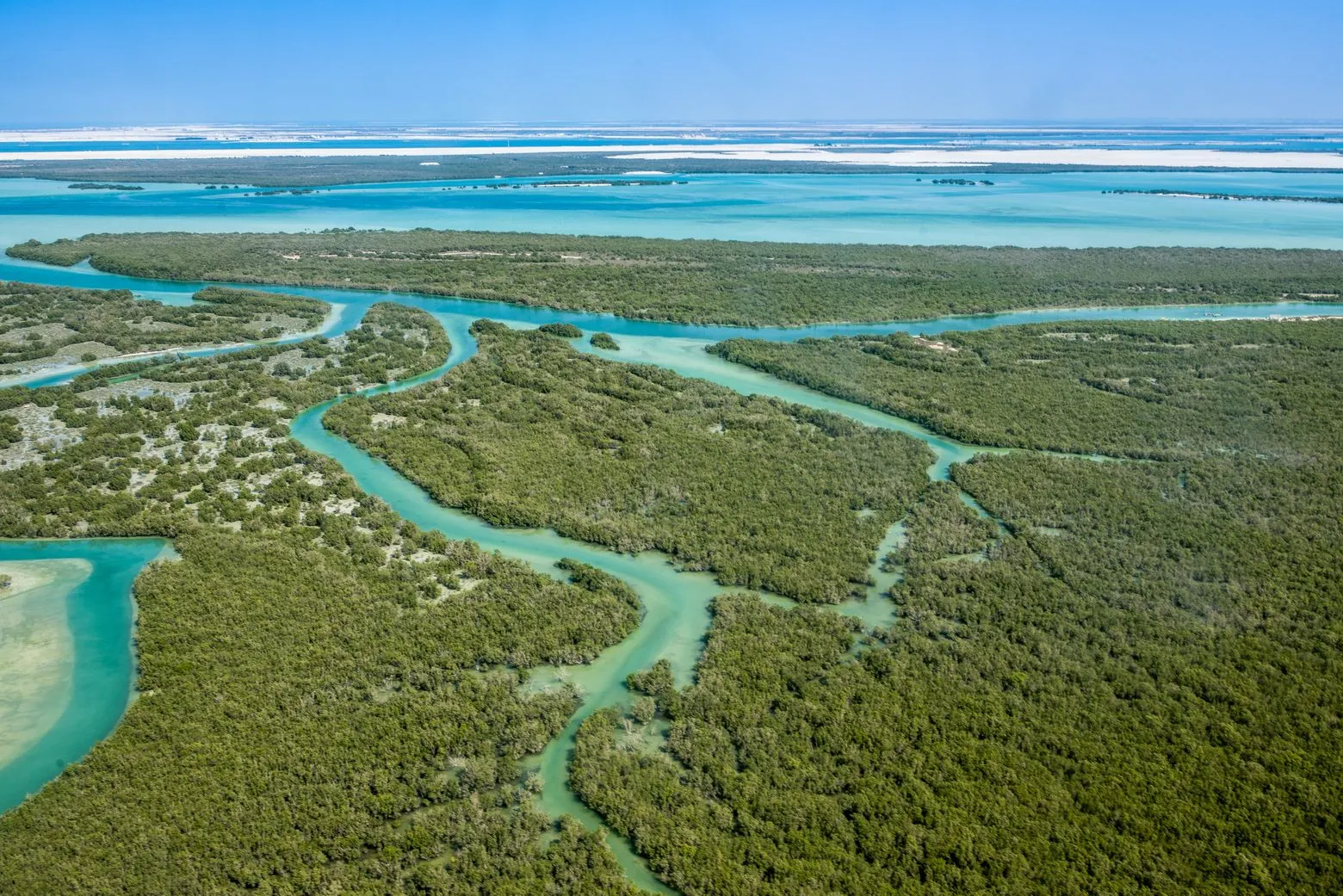
In practice, this is visible in several areas. In 2024, NMDC Group deployed more than AED 240 million into clean technology-related initiatives, spanning fuel optimisation, renewable energy infrastructure, offshore wind-related engineering and more efficient marine operations. At the same time, it continued to invest in nature-based and biodiversity-linked projects, including artificial reef deployment and tidal mudflat regeneration.
Equally important is how this sustainability agenda is being connected to delivery and resilience. Across the same period, NMDC Group reported more than two million hours of safety training and a 12% year-on-year reduction in Total Recordable Incident Rate (TRIR), reinforcing that long-term sustainability in industrial sectors must also be underpinned by strong operational discipline.
This is what increasingly defines sustainability leadership in energy and infrastructure today: not a separate ESG narrative, but the ability to integrate sustainability into how a company builds, operates, innovates and grows.
For the energy and infrastructure sector, the next phase of sustainability will be shaped less by ambition alone and more by execution. The companies best positioned for long-term success will be those that can translate sustainability into practical business value through more efficient operations, smarter project delivery, stronger stakeholder confidence and better preparedness for a rapidly evolving market. In that sense, sustainability is no longer just a responsibility to manage, but a defining factor in building resilience, maintaining relevance and enabling long-term growth for energy and infrastructure giants.
Powered by