WET: What are the ministry’s priorities in working towards meeting the targets of the UAE’s energy transition? What needs accelerating/modifying?
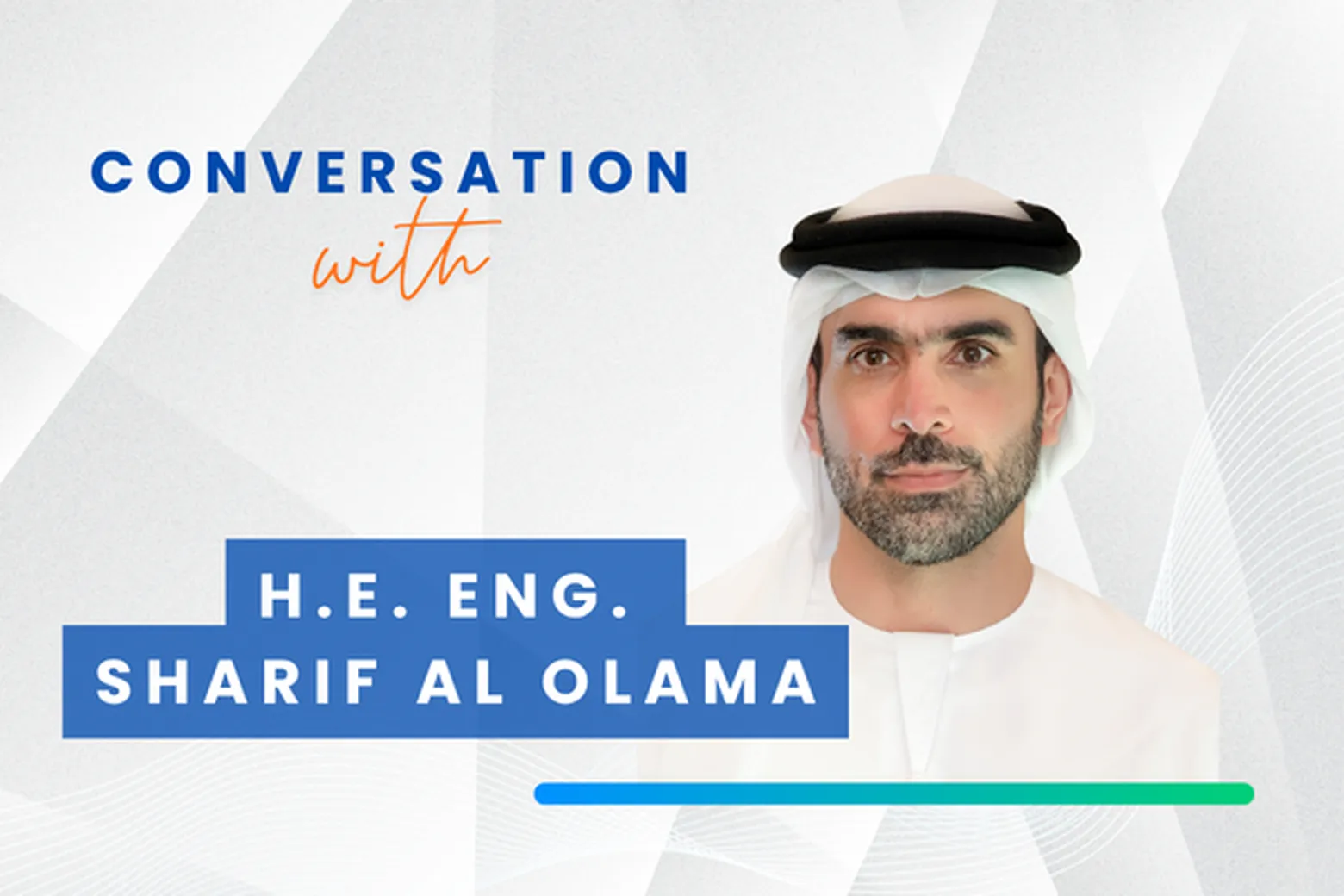
H.E. Eng. Sharif: The UAE’s energy transition is focused on three priorities: scaling clean energy, improving efficiency, and ensuring system integration. From a Ministry’s perspective, we are enabling a balanced energy mix, renewables, nuclear, and gas while accelerating demand-side efficiency and building smarter, more digital infrastructure. At the same time, we are working across government with partners like Masdar, ADNOC, and climate authorities to position the UAE as a global hub for clean energy and hydrogen. What we are accelerating is execution speed, particularly in hydrogen development and the use of AI to move towards more predictive, integrated energy systems. Ultimately, our strength is in combining energy, infrastructure, and technology into one coordinated system to deliver both sustainability and economic growth.
WET: For oil and gas, the UAE is expanding production and refining capacity – how is this being incorporated into the country’s plans for emissions reductions and net zero?
H.E. Eng. Sharif: The UAE is pursuing a dual-track strategy: expanding oil and gas capacity while reducing emissions to stay aligned with its net-zero by 2050 goal.
It focuses on lower-carbon barrels by reducing emissions intensity through electrification and carbon capture and storage (CCS) technologies. Oil and gas operations are increasingly powered by clean energy, including nuclear and solar power.
The UAE is scaling carbon management systems, targeting large CO₂ capture capacity by 2030. At the same time, it is investing heavily in renewables, hydrogen, and low-carbon fuels to diversify the energy mix. In short, the UAE is not reducing production but making it one of the lowest emissions globally, while accelerating the transition to clean energy.
WET: Can you give us some examples of energy efficiency strategies and methods that you are prioritizing right now? What have been the challenges in boosting energy efficiency in oil and gas production?
H.E. Eng. Sharif: The UAE is prioritizing digitalization, electrification, and operational optimization to improve energy efficiency across the oil and gas value chain.
We can also see a strong push for the electrification of operations, especially through ADNOC’s shift to clean grid power (nuclear and solar) and projects like the offshore electrification initiative, which is already helping to reduce emissions significantly.
On the refining side, complexes like Ruwais Industrial Complex are continuously being upgraded to improve efficiency and extract more value per barrel with less energy input. At the same time, we’re tightening controls on flaring and methane emissions, which is both an efficiency and environmental priority.
That said, the challenges are real. Some assets are mature, so retrofitting them is capital-intensive, and offshore operations add another layer of technical complexity. There’s always a balance to strike between improving efficiency and maintaining production growth, especially in today’s market conditions.
WET: How important is the petrochemical and plastics industry for the future of oil and gas in the UAE? Do you foresee a transition away from hydrocarbons as an energy source towards hydrocarbons as raw material for the petrochemical and fertilizer industries? How might this evolve?
H.E. Eng. Sharif: Petrochemicals are becoming central to how the UAE is thinking about the future of hydrocarbons. It’s not about moving away from oil and gas but rather using them more intelligently.
We’re already seeing this shift in places like the Ruwais Industrial Complex, which is evolving into one of the world’s largest integrated refining and petrochemical hubs. On top of that, developments like TA’ZIZ Industrial Chemicals Zone are specifically designed to expand the UAE’s chemicals and manufacturing base—producing everything from industrial chemicals to materials that feed into global supply chains.
Looking ahead, the direction is quite clear. While fuels will remain important, a growing share of hydrocarbons will go into petrochemicals, fertilizers, and advanced materials. It’s a gradual transition, not a sudden shift.
At the same time, we are very aware of global sustainability pressures, so this growth is being paired with recycling initiatives, circular economy models, and lower-carbon production technologies. In simple terms, hydrocarbons are not disappearing—they’re just moving up the value chain.
WET: How do you foresee carbon capture, utilization, and storage developing in the UAE? Can you tell us about what projects are going on regarding CCUS in the country?
H.E. Eng. Sharif: The UAE sees CCUS as a critical enabler of a balanced and realistic energy transition, particularly for hard-to-abate sectors. We already have a strong foundation. The Al Reyadah facility was the first large-scale CCUS project in the region, and today ADNOC is scaling this significantly, targeting up to 10 million tonnes of CO₂ capture annually by 2030. Projects such as Habshan and Hail & Ghasha are integrating carbon capture at scale from the outset. At the same time, we are moving beyond individual projects, looking into CO₂ storage infrastructure and building a more integrated carbon management system that can support multiple industries. We are also linking CCUS to emerging sectors such as hydrogen and clean fuels, ensuring long-term impact.
Looking ahead, we are beginning to assess the role of carbon dioxide removal as part of the longer-term transition. This remains at an early stage but reflects our forward-looking approach.
Overall, the UAE’s strength lies in scaling quickly and integrating across the full carbon management value chain.
WET: Regarding the environment, what approach have you taken towards minimizing the impact of both existing and new infrastructure in the energy sector, onshore and offshore?
H.E. Eng. Sharif: Our approach is to minimise environmental impact across the full lifecycle of energy infrastructure, from design through to operation. This means integrating sustainability upfront, using cleaner technologies, improving efficiency, and leveraging digital tools to optimise performance. At the same time, we apply strict environmental standards for both onshore and offshore developments, supported by strong regulatory frameworks and continuous monitoring. Ultimately, the shift is from managing impact to proactively designing resilient infrastructure from the outset.
The UAE takes a lifecycle and system-wide approach to minimising environmental impact across energy infrastructure, both onshore and offshore. For new infrastructure, the priority is to embed sustainability from the design phase. This includes the use of cleaner energy sources, low-emission technologies, and smart design principles that reduce land, water, and biodiversity impact. Increasingly, digital tools such as advanced monitoring and optimisation systems are also being integrated to ensure efficient and low-impact operations over time. For existing infrastructure, the focus is on optimisation and retrofitting, reducing emissions, improving energy efficiency, and extending asset life in a more sustainable manner. This is particularly important in sectors such as oil and gas, where decarbonisation solutions like electrification, CCUS, and methane reduction are being deployed.
Across both onshore and offshore environments, we operate within a strong regulatory and environmental framework, ensuring compliance with high standards while enabling continued development. Importantly, this is not done in isolation. There is close coordination across federal and emirate-level entities, as well as with industry leaders, to ensure alignment between infrastructure development and broader climate and environmental goals.
Overall, the UAE’s approach is to move from mitigating impact to designing infrastructure that is inherently more efficient, resilient, and environmentally responsible.